What is Digital Health?
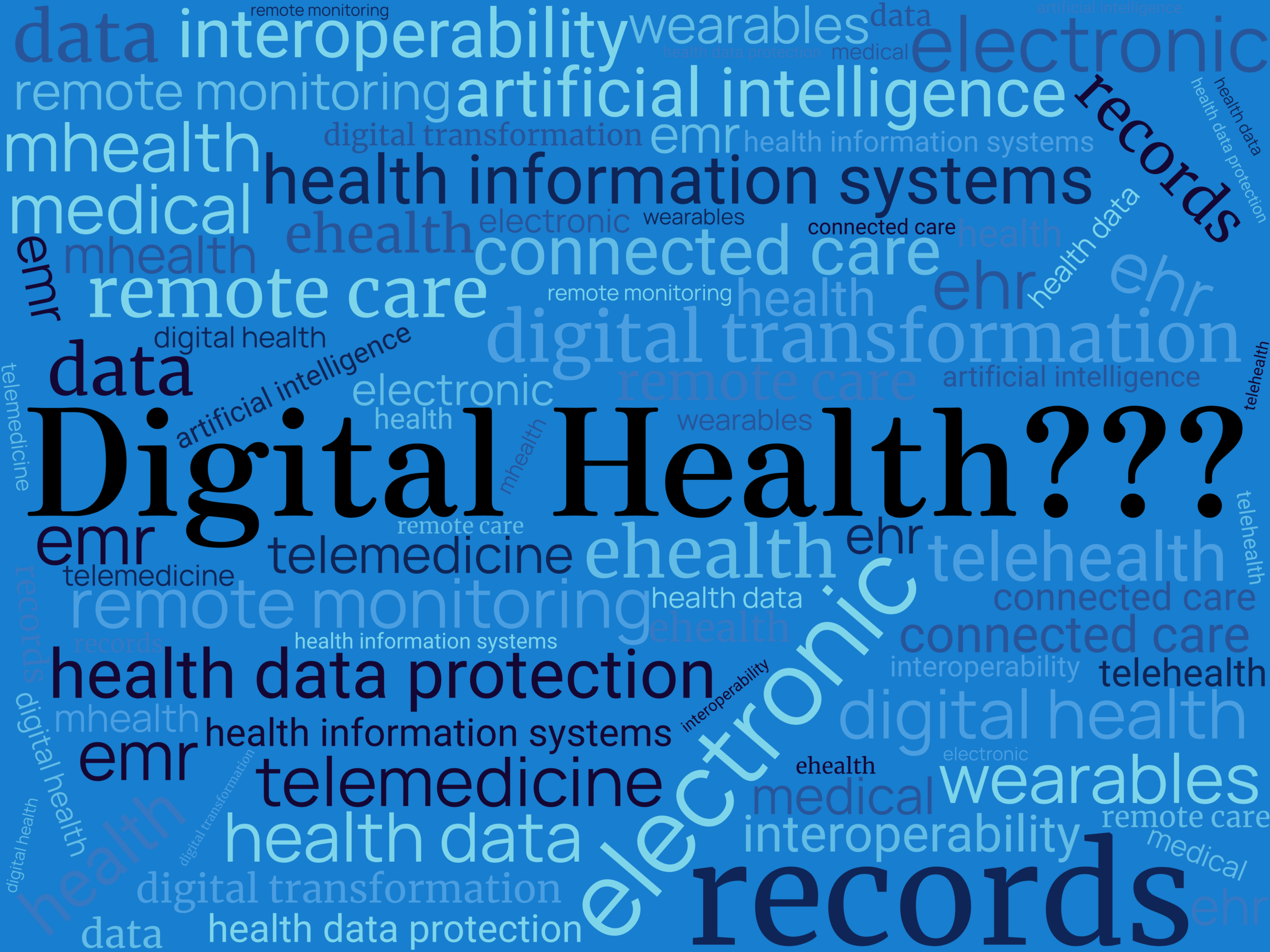
People ask me this all the time when I mention what I do: “Digital health… what is that exactly?” And it’s a fair question because the term gets used to describe everything from hospital IT systems to apps, AI tools, telemedicine, and national health data platforms. There is so much that can be mentioned in defining this, from simple to very complex. I will try to distil this simply and build on different facets in future posts.
A useful starting point is the definition used by World Health Organization in its Global Strategy on Digital Health 2020–2025: digital health is the field of knowledge and practice associated with the development and use of digital technologies to improve health. (World Health Organization)
That framing matters because it immediately signals two things:
- Digital Health is not just “technology” (it’s practice, governance, and implementation), and
- it’s about improving health outcomes and how systems function, not deploying gadgets for their own sake. (World Health Organization)
You’ll also see similar, practical framing elsewhere, for example, the European Commission describes digital health as tools and services using ICT to support and improve healthcare across prevention, diagnosis, treatment, monitoring, and management. (EU Digital Health and Care)
Simply put…
Digital health means using technology to make healthcare easier, safer, and more connected.
It can mean:
• Seeing your doctor through video
• Accessing your test results online
• Making sure your medical records follow you between hospitals
• Using apps or devices to manage long-term conditions
It’s not about replacing doctors with machines.
It’s about helping health systems work better for people.
What digital health includes (in the real world)
Digital health is a big umbrella. Depending on the context, it can include:
- electronic health records and hospital information systems
- telemedicine and virtual care
- health data platforms and analytics
- digital public health (surveillance, outbreak response, population health monitoring)
- mobile health and remote monitoring
- (increasingly) AI tools embedded in clinical or operational workflows (World Health Organization)
So why does it feel confusing? Because “digital health” isn’t one product. It’s a set of capabilities across a health system.
Digital health is why you can:
• Book appointments online
• Have virtual consultations
• Get reminders for medication
• Access your medical information securely
• Avoid repeating your history at every clinic
Behind the scenes, it’s also what helps health systems coordinate care and make better decisions.
What digital health means for different people
For policy-makers and health leaders
Digital health is about building the conditions for scale and sustainability:
- strategy and investment priorities
- governance and accountability
- standards and interoperability
- data protection, trust, and equity considerations
- workforce readiness and change management
This is why the WHO strategy emphasises that digital initiatives need to be guided by a robust strategy that integrates organisational, financial, human, and technological resources, not just software procurement. (World Health Organization)
For clinicians and other health workers
Digital health should reduce friction and improve care—not add burden.
That can mean:
- safer, more complete patient information at the point of care
- better continuity across settings
- decision support that’s explainable and appropriate
- easier communication with patients and teams
Importantly, WHO’s guideline work on digital interventions stresses evaluating benefits, harms, feasibility, acceptability, resource use, and equity because tools that don’t work in practice don’t improve care. (World Health Organization)
For implementers (digital teams, vendors, programme managers)
Digital health becomes about delivery realities:
- workflow redesign and service transformation
- integration across systems (not standalone apps)
- data quality, governance, and information architecture
- procurement models that don’t lock systems into fragmentation
- monitoring and improvement after go-live
In other words: implementation is not “launch day”, it’s operationalisation.
For patients and the public
Digital health should translate into:
- easier access to services (including at home or in remote areas)
- more timely information and follow-up
- better continuity of care
- tools that support self-management without widening inequities
This “access + quality + equity” emphasis is central to how WHO frames digital health’s purpose. (World Health Organization)
At this point, many people have a very practical question: If my health information is digital, how do I know it is safe and protected?
But what about my privacy and protection?
This is an important and legitimate question that I will address in more detail in later posts. Essentially, health information is among the most sensitive types of personal data, and protecting it is a fundamental principle of modern healthcare. International health and data-protection frameworks emphasise that personal health data must be handled with strong safeguards to ensure confidentiality, integrity, and secure access.
In practice, this means that responsible digital health systems are designed around several key principles:
- Privacy and confidentiality – Only authorised health professionals should be able to access your medical information.
- Consent and transparency – You should know what data is being collected, why it is needed, and who can access it.
- Security and encryption – Modern systems use technical safeguards to protect health information from unauthorised access or cyber threats.
- Strong laws and oversight – Many countries have strict regulations governing health data, ensuring organisations are accountable for protecting patient information.
When implemented responsibly, digital health does not weaken privacy; it can actually strengthen it. Digital systems can provide clear access controls, audit trails showing who accessed data, and better safeguards than paper records.
Ultimately, trust is central to digital health. Technology should serve patients, empower individuals, and ensure that health data is used only in ways that support better care, better health, and stronger health systems.